

Appeal from the UniVerde Foundation and Marevivo to the Government and Parliament: “The right to high-quality drinking water must be guaranteed for small islands, avoiding waste and respecting ecosystems, habitats, marine protected areas, and citizens’ health.” Mobile marine desalination plants are a fast, economical, and sustainable response to the water needs of many small Italian islands, even during peak tourist periods.
The Minister of the Environment and Energy Security, Gilberto Pichetto Fratin, has assured attention and commitment in addressing the issue of desalination and its implications, and in evaluating the alternative represented by mobile marine desalination plants.
Conference at Palazzo Valentini in Rome: “Agenda 2030 and the right to water for small islands. Sustainable alternatives for high-quality, sea-friendly water supply”, broadcast live on Radio Radicale.
(ROME, June 28, 2023) Land-based desalination plants are expensive to both build and maintain, energy-intensive, and have a significant impact both on the coasts that host them—or will have to host them with long and uncertain construction times—and on local marine flora and fauna due to brine discharges.
This is what emerges from the reports by Roberto Di Vincenzo (former director of the then Ministry of Merchant Marine) and Giuseppe Taverna (former director for integrated water services and water supply for the small islands of the Sicilian Region). Although starting separately, they reach the same conclusions, providing a disturbing insight into the case study of the small islands of Sicily, where approximately 33,000 inhabitants reside permanently (a number that increases tenfold in summer periods). The supply of drinking water is entrusted precisely to this type of desalination plant which, in some cases, is so obsolete and dilapidated that it makes meeting 70% of the water requirement—estimated by the Sicilian Region’s P.R.G.A. at 5,140,000 cubic meters (and significantly exceeded with the presence of tourists)—economically and environmentally unsustainable.
Given the volcanic origin of various Sicilian islands, some still affected by eruptive phenomena; considering the morphology of their territories which complicates land-based project developments; the lack of network interconnection, which is also affected by pressure losses exceeding 50%; and considering the natural value of many islands which led, to name a few, to the establishment of the Pantelleria National Park, the Marine Protected Areas of the Egadi, Ustica, and Pelagie, or the inclusion of the Aeolian Islands as a World Heritage Site; the chorus of interventions opened by the introductory report of Giuseppe Nerio Carugno (Secretary General of the UniVerde Foundation) was almost unanimous on the need to guarantee the right to high-quality drinking water for the citizens of small Italian islands without compromising the natural heritage.
In this worrying scenario, mobile marine desalination plants emerge even more strongly as a valid, sustainable, and economical alternative to fixed plants, allowing for the optimization of safety and supply plans for drinking water to small islands even in cases of crisis, emergencies, and increased water demand during the tourist season.
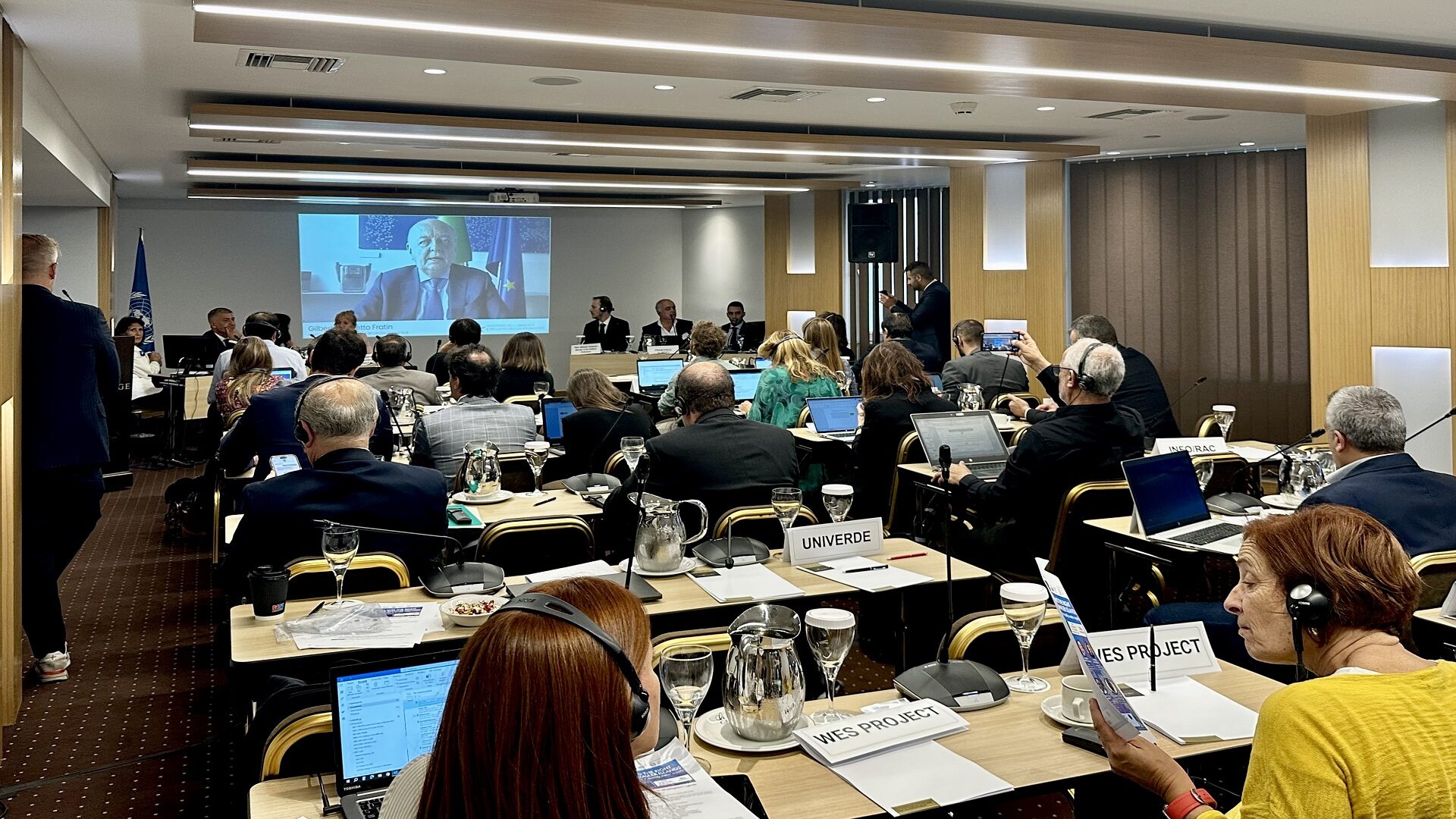
These topics were discussed today at the conference moderated by Alessio Falconio (Director of Radio Radicale), “Agenda 2030 and the right to water for small islands. Sustainable alternatives for high-quality, sea-friendly water supply“, organized by the UniVerde Foundation, Marevivo, and the Metropolitan City of Rome Capital, under the patronage of ANCIM – National Association of Small Island Municipalities, which took place at the Sala Di Liegro of Palazzo Valentini in Rome.
The conference was opened with a welcome greeting from Rocco Ferraro (Councilor of the Metropolitan City of Rome Capital delegated to ecological transition, environment, protected areas, and animal protection), who complimented the UniVerde Foundation and Marevivo and assured maximum support for the initiative because “the issue of water is fundamental and urgent to address,” as well as “crucial for small local realities such as small islands.”
Alfonso Pecoraro Scanio (President of the UniVerde Foundation): “On the issues of sustainable desalination processes, the right to high-quality drinking water for citizens of small islands, and the protection of the sea, the UniVerde Foundation and Marevivo have always involved institutions to obtain adequate regulations. This is an urgent health and environmental issue that must find a solution. Clear and unambiguous regulation is needed regarding the distribution and management of land-based desalination plants, along with stricter directives on highly polluting brine discharges on the coast. The hypothesis of adopting mobile marine desalination plants represents a valid response both to land consumption by fixed plants and to the need to protect marine flora and fauna. This is the meaning of today’s initiative and the appeal we address to the Government and Parliament for an effective steering function, carrying out a SEA (strategic environmental assessment) but also to support ‘made in Italy’ technological innovation.”
Carmen Di Penta (General Director of Marevivo): “For 38 years we have been fighting for the sea to be ‘alive’ and among the many activities we have also addressed the problems of small Italian islands regarding the issue of desalination plants. For a year, we met assiduously at a table together with the Ministry, seeking guidelines to implement for correct desalination—guidelines that were also included within the Salvamare Law, which we hope will become active immediately. We all know that our health depends on the health of the sea, so if the sea has problems, we will not be well either.”
Gilberto Pichetto Fratin (Minister of the Environment and Energy Security), via video link, assured attention and commitment in addressing the issue of desalination, its implications, and the alternative represented by mobile desalination plants for the supply of small islands. More generally, the Minister emphasized the need to create the right conditions for optimal water infrastructure, in order to “find a point of balance, the right way,” for an important and urgent issue such as the management of water resources.
Patty L’Abbate (Vice President of the Commission for “Environment, Territory and Public Works”, Chamber of Deputies) underlined the importance of continuing the legislative process on the proposed Framework Law for the development of small marine, lagoon, and lake islands, which provides for guaranteeing water supply through the use of low energy consumption techniques, as well as the recovery of rainwater with micro and phyto-purification and the reuse of wastewater, appropriately treated, to be used safely in agriculture, from a circular economy perspective. It is necessary to plan clear actions in the short and long term, carry out prevention, and choose appropriate technologies considering environmental impact assessment methods and the fragility of the territories.
Representing the National Association of Small Island Municipalities, Gian Piera Usai (National Secretary of ANCIM) spoke, indicating the need to respond to the issues of water reuse and to combat leaks from pipelines. To help reduce the risk of flooding, the solution proposed by the national association is to create reservoirs to harness torrential waters, in addition to the reforestation of areas to stem landslides and soil loss, without forgetting the need for more targeted building regulations. For integrated development, which is a condition for the implementation of efficiency projects, she relaunched the proposal for a national water plan for all small islands.
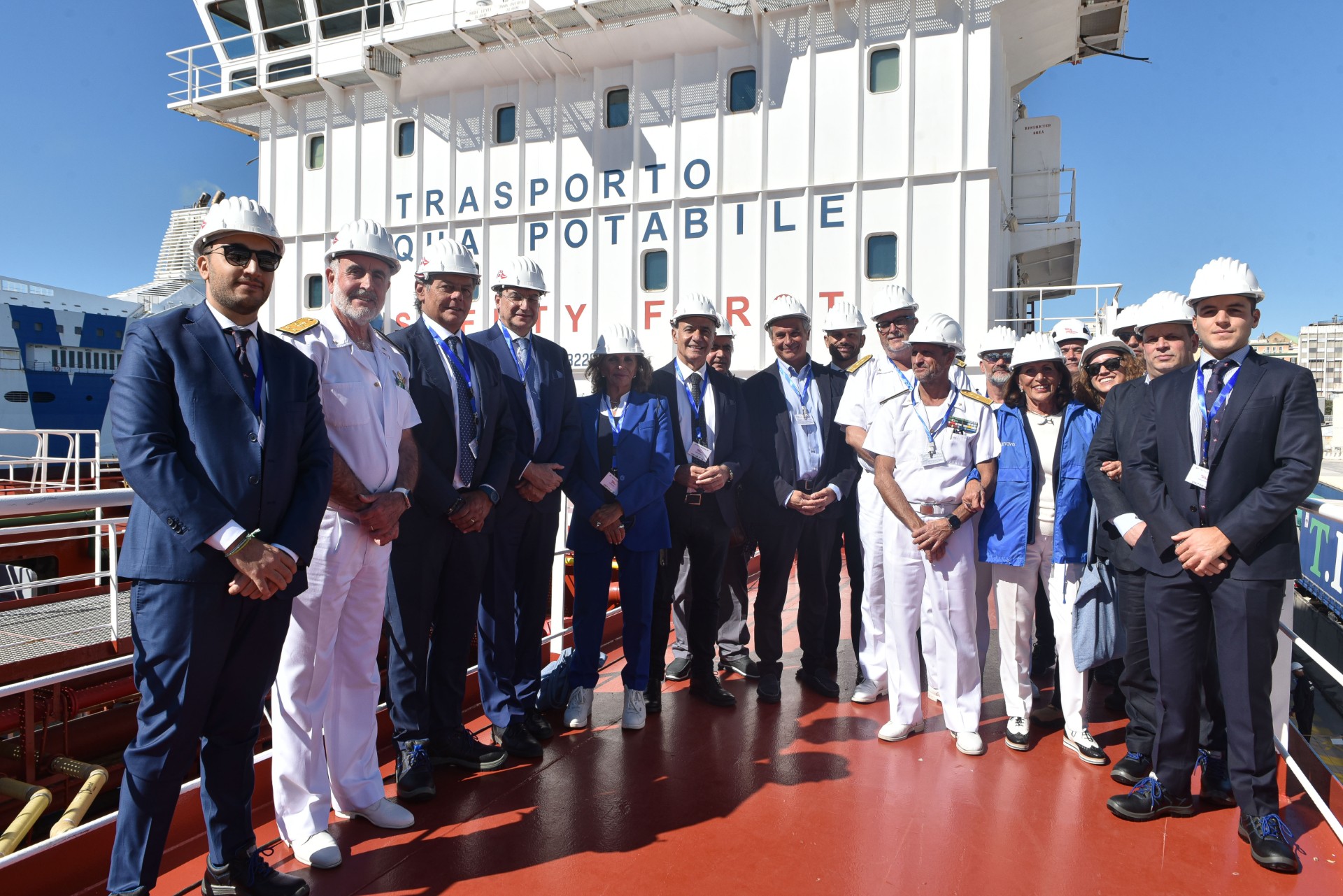
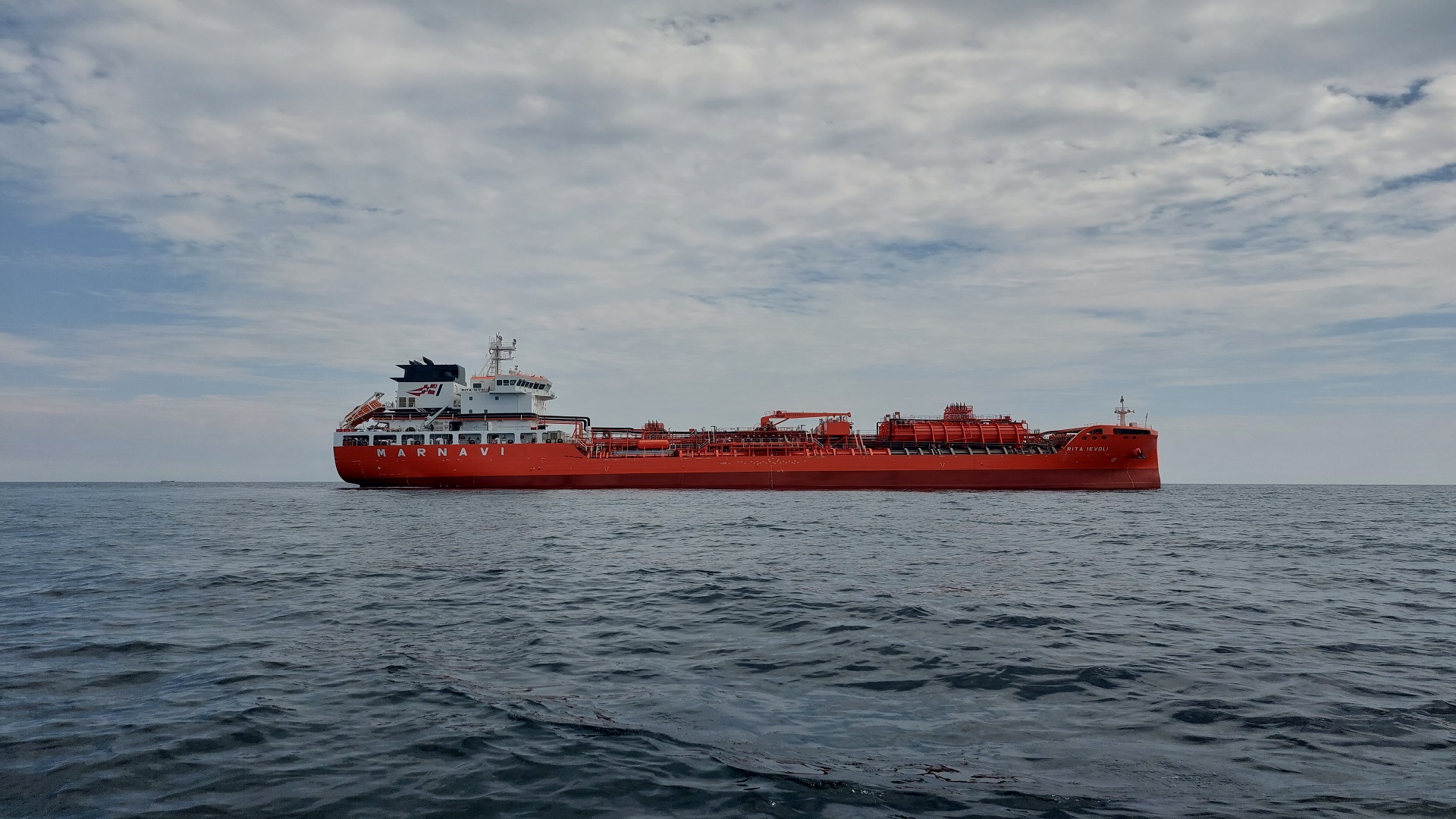
Following this, a video of the mobile marine desalination plant created by Marnavi was screened. Flexibility of use, quality of the treated water—cleaner because it is taken offshore and at depth—protection of the landscape and coastal strips in the absence of land consumption, and protection of the sea and ecosystems in the absence of the devastating saline impact due to the concentrated discharge of brine at a single point—typical of fixed plants—as it discharges and disperses it gradually into the sea, also utilizing the propeller, during navigation. These are just some of the advantages deriving from the use of mobile marine desalination plants compared to land-based desalination plants which, moreover, in the event of a plant shutdown, sudden requirements, or a water emergency, require the use of maritime transport of drinking water, representing an additional cost. Without considering that the authorization process for land-based desalination plants almost always takes years.
Giuseppe Cavuoti (Director of the Mission Structure for Sea Policies at the Presidency of the Council of Ministers), in underlining that the right to water represents an extension of the right to life, relaunched the first Sea Plan, the elaboration and approval of which must be carried out by CIPOM. The document will be published by July and will contain—for the first time in the country’s history—the strategic guidelines for the next three years regarding the protection and enhancement of the “sea resource” from an energy, environmental, logistical, economic, and institutional relations perspective. In the same document, Cavuoti highlighted, an entire chapter dedicated to the “system of small islands” is planned.
During the conference, technical reports from experts and professors from various Italian universities were illustrated. Luca Lucentini (Director of the National Center for Water Safety, Higher Institute of Health) confirmed compliance with the quality standards for drinking water produced by mobile marine desalination plants. Francesco Aliberti (Professor at the Department of Biology, University of Naples Federico II) highlighted the impacts of land-based desalination plant discharges on the marine environment and the limits for real monitoring, pre- and post-abstraction, of water quality along the coast; as well as the potential health impacts of drinking water produced by land-based plants. Roberto Danovaro (Full Professor at the Polytechnic University of Marche) considers the supply of drinking water with mobile desalination plants extremely useful, clearly stating the better quality of water collected offshore. Danila Iacovelli (UNESCO Chair Professor, Polimi – Mantua Campus and Researcher in Administrative Law at the Polytechnic of Milan) called for a reflection on new geo-constitutionalist theories which, although in the minority, aim to recognize the priority of nature, leading to the idea of a remodeling of the constitutional structure based on environmental protection, with the consequent subjection of political power to respect for nature.
The event was promoted with the media partnership of Radio Radicale, Askanews, Italpress, TeleAmbiente, Opera2030, and SOS Terra.