

Italian technology can meet the water needs of smaller islands in a safe, fast, economical, and sustainable manner.
The event was promoted by Fondazione UniVerde, Fondazione Marevivo, and UNEP/MAP with the patronage of the Italian Embassy in Athens.
Gilberto PICHETTO FRATIN: I assure our commitment to addressing the issue of desalination, its implications, and evaluating the alternative represented by marine mobile desalination units that could address, in certain contexts, both contingent and structural difficulties. We have the responsibility to protect the beautiful and vast heritage represented by the smaller islands.
Tatjana HEMA: Sharing best practices and new technologies to prevent marine pollution, protect biodiversity and ecosystems, save energy and water is the path to follow to promote sustainable desalination, particularly in areas with high water demand, including small islands.
Alfonso PECORARO SCANIO: I appeal to the Italian Government and Parliament for an effective guiding function. Clear and unambiguous regulation is needed on the deployment and management of land-based desalination plants and more stringent directives on highly polluting brine discharges along the coast.
(ATHENS, October 25, 2023) Common sense dictates that the time has come to abandon highly impactful systems when new technologies are already available, moreover widely used in emergencies by the Italian Government, to provide quality water to the smaller islands. The global climate crisis demands immediate action, because dotting smaller islands or entire archipelagos with fixed desalination plants that are energy-intensive and harmful to coastal ecosystems is a completely anachronistic policy. Marine mobile desalination units, built with Italian technology, currently represent the fastest, most sustainable, economical, and safe solution to optimize the management of safety and drinking water supply plans for smaller islands, even in cases of crises, emergencies, and increased water demand during the tourist season.
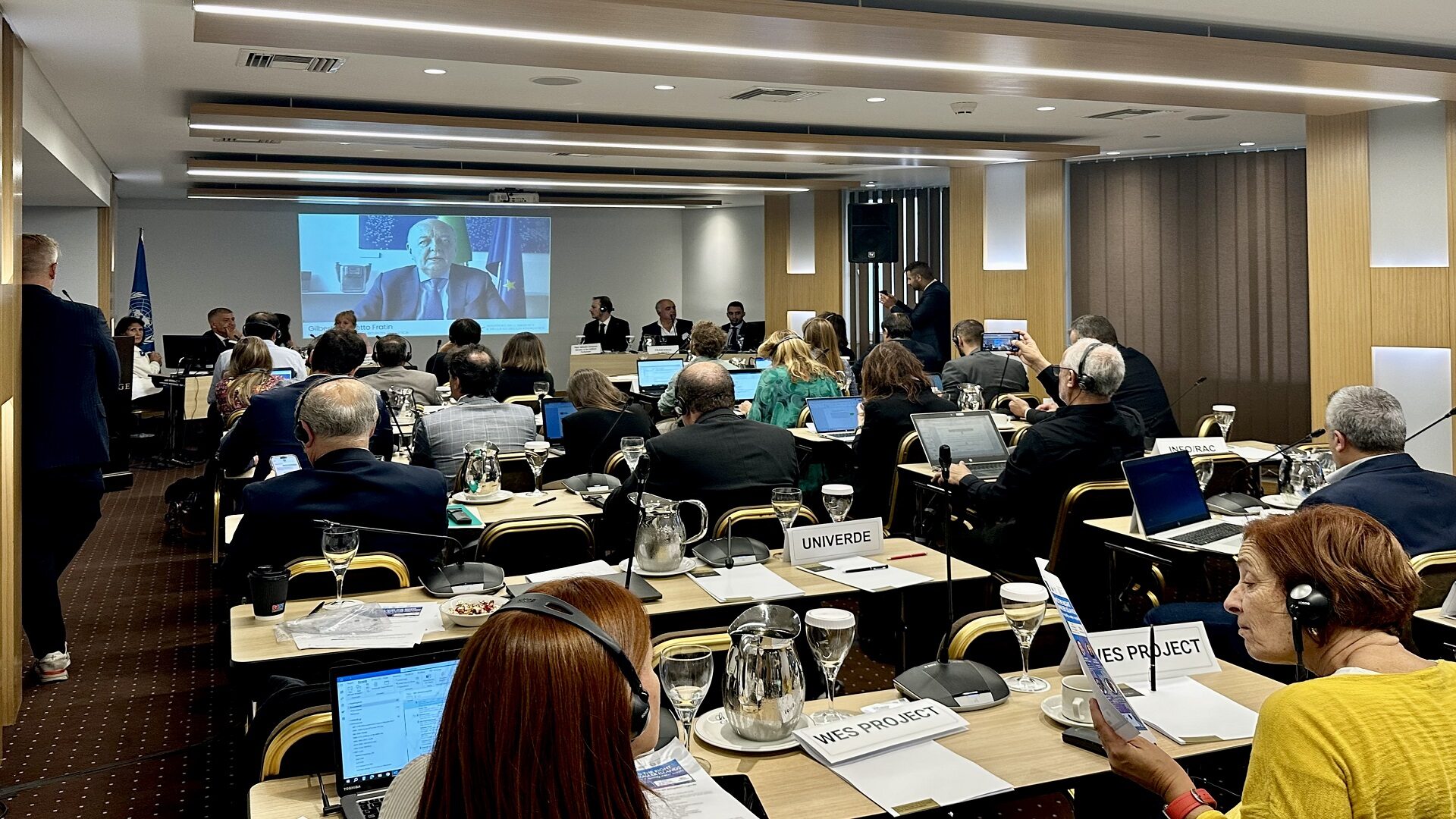
These topics were discussed yesterday in Athens at the conference “Agenda 2030 and the right to water of the smaller islands. The sustainable alternatives for a quality water supply,” promoted by Fondazione UniVerde, Fondazione Marevivo ETS, UNEP/MAP – United Nations Environment Programme / Mediterranean Action Plan (the United Nations Environment Programme coordinating the Mediterranean Action Plan) with the patronage of the Italian Embassy in Athens and with the participation of the Deputy Head of Mission, Susanna Schlein.
The event, included in the panel “Regulatory and policy framework on marine pollution, prevention and reduction from land-based sources and activities” co-promoted by UNEP/MAP and WES Project and supported by the European Union, provided an opportunity to analyze, in a highly qualified international context, the critical issues related to land-based desalination plants, present one of the most interesting and sustainable alternatives to fixed plants and their impacts, and call for new international guidelines and/or measures for sea-respectful desalination, also within the context of the Barcelona Convention. UNEP/MAP and the contracting parties to the Convention – 21 Mediterranean countries and the European Union – have progressively created an institutional, legal, and implementation framework that integrates essential elements for sustainability in the Mediterranean, aimed at realizing the vision of healthy marine and coastal ecosystems for the sustainable development of the Mediterranean region.
Alfonso Pecoraro Scanio (President of Fondazione UniVerde and former Minister of the Environment and Minister of Agricultural Policies): “On the issues of sustainable desalination processes, the right to quality drinking water for citizens of smaller islands, and the protection of the sea, Fondazione UniVerde and Marevivo have always promoted public discussion events, information, and involved Italian Institutions to obtain adequate regulations. Our ambitious message is strengthened by the international stop in Athens, which sees us alongside UNEP/MAP, to pave the way for progress toward an economy that respects the blue lung of the Planet. Clear and unambiguous regulation is needed on the deployment and management of land-based desalination plants and more stringent directives on highly polluting brine discharges along the coast. This is an urgent health and environmental issue that must find a solution. The option of adopting marine mobile desalination units represents a valid response both to land consumption by fixed plants and to the need to protect marine flora and fauna. This is the meaning of today’s initiative and the appeal we address to the Italian Government and Parliament for an effective guiding function, implementing a SEA (strategic environmental assessment) but also to support a made-in-Italy technological innovation such as the marine mobile desalination unit.”
Carmen Di Penta (General Director of Marevivo): “The smaller islands are a precious environmental asset not only for their historical, landscape, and traditional characteristics, but also and above all for the sea that surrounds them. To find the best solutions for their sustenance, it is useful to define mitigation measures for the protection of the sea as an asset. I used the term ‘asset’ and not ‘resource,’ because if we do not protect the asset, we will also lose the resource. Without forgetting that drought forces us to find alternative and more sustainable solutions once again.”
Tatiana Hema (UNEP/MAP Coordinator): “Desalination is an important sector rapidly developing and expanding in the Mediterranean, considering climate change and water scarcity. UNEP/MAP promotes and defines regional standard policies for sustainable desalination, already included in the Protocol on Land-Based Sources and Activities of the Barcelona Convention. Sharing best practices and new technologies to prevent marine pollution, protect biodiversity and ecosystems, save energy and water is the path to follow to promote sustainable desalination, particularly in areas with high water demand, including small islands.”
Gilberto Pichetto Fratin (Minister of the Environment and Energy Security), in a video message, emphasized: “The privilege that Greece and Italy have of enjoying so many islands in the Mediterranean corresponds to the responsibility to protect this beautiful and vast heritage. A defense all the more necessary and important at a time when climate change impacts marine ecosystems so significantly, especially in Mare Nostrum. Solutions for accessing water resources often involve high environmental impact, the use of considerable energy, and waste production. During tourist seasons, with the massive use of tanker ships, all this often becomes unsustainable.” The objective is to focus on the best existing solutions and practices in the European context; in this regard, Minister Pichetto Fratin highlighted: “We are conducting an in-depth study on desalination projects, and therefore on the marine mobile desalination unit, a new technology for Italy that could address, in certain contexts, both contingent and structural difficulties. We are working to renew the existing water network, to build and implement wastewater treatment plants. All this within the framework of the fight against waste and to encourage rainwater collection, on which the Government places great importance. With the PNRR, we are committed to the Green Islands project, 140 projects on 19 smaller islands, also for water sector management.”
Miltiadis G. Zamparas (Member of the Greek Parliament): “The issue of water resources is a major problem for countries with many islands like Greece. In 2030, it is expected that annual drinking water demand will increase by a further 32% compared to 2021 in the South Aegean region, and this, combined with the significant drought problems we will face in the coming years due to climate change, makes clear the great challenges we will face as a country in the coming years. Over the past 50 years, in Greece, approximately 50 islands have been abandoned due to problems related to living in isolated places. Among these is precisely the lack of water. Conditions must be created for the return of inhabitants to the islands but, considering the threatening forecasts for the future of our Planet regarding climate change, a green policy focused on environmental protection is necessary. To achieve these objectives, it is essential that water remains a public good and is managed only by the public sector.”
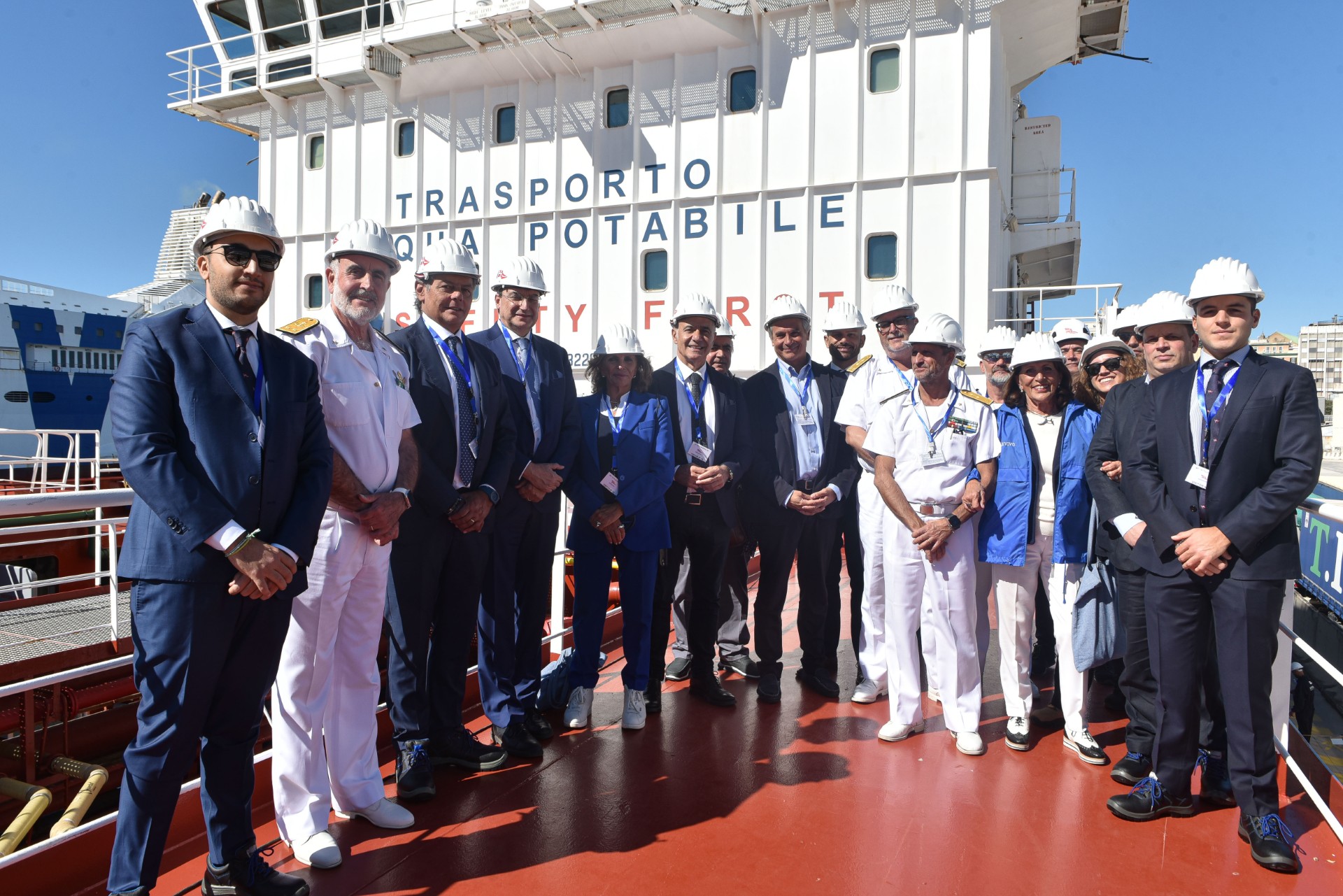
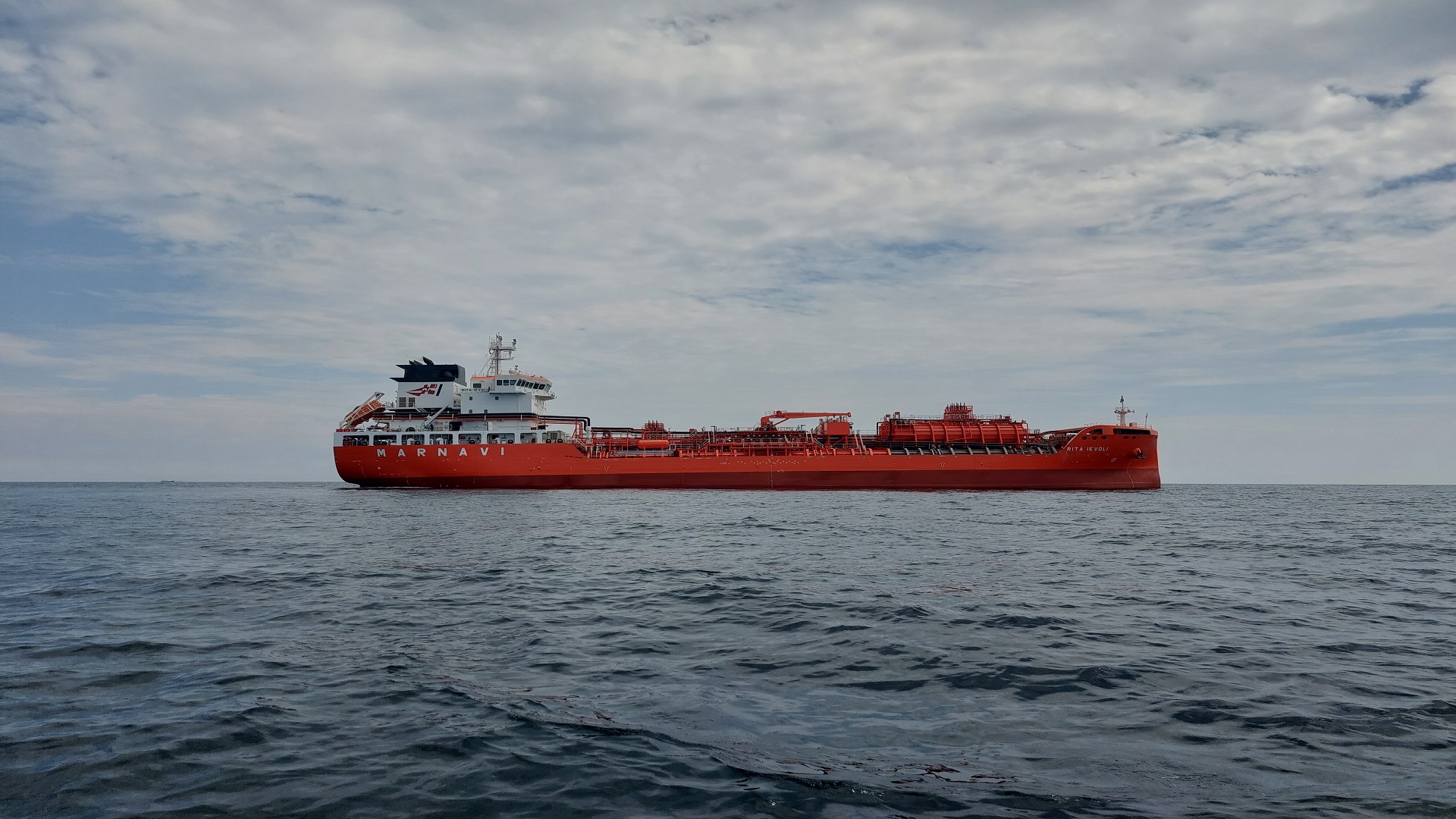
During the conference, a video of the marine mobile desalination unit built by Marnavi was shown, with an intervention by Domenico Maria Ievoli (Commercial Director of Marnavi).
In summary, compared to land-based plants, the Italian marine mobile desalination technology allows, among many advantages, the reduction of construction costs and times, maintenance costs, avoiding land consumption by highly energy-intensive structures and greatly reducing environmental impacts along the coasts of islands, often pristine and sometimes located in Marine Protected Areas that are treasures of thriving ecosystems and biodiversity.
Unlike fixed plants, which draw water along the coast, often near ports and therefore of questionable quality, and at the same time discharge massive quantities of brine – highly impactful and contaminated by chemical reagents – at a short distance from the shorelines and near, moreover, the intake point; the marine mobile desalination unit draws water offshore and at depth where conditions clearly make it of better quality and therefore subject to less impactful treatments. Furthermore, it gradually disperses the brine during navigation, also utilizing the propeller’s driving force to avoid its concentration in single points. The water produced is safe and of quality, remineralized according to current regulations. Additionally, a research agreement has been established with the Istituto Superiore di Sanità for the definition of the Water Safety Plan for this type of plant.
Knowledge about the potential marine impact of land-based desalination plants is rapidly increasing in the Italian scientific context. At the conference, technical reports were presented by experts and professors from various Italian Institutions and Universities: Luca Lucentini (Director of the National Center for Water Safety, Istituto Superiore di Sanità) reiterated that problems related to desalination are closely linked to the quality of the resource produced, which must guarantee human health and minimize environmental impacts, and concluded his presentation confirming compliance with drinking water quality standards produced by marine mobile desalination units; Roberto Danovaro (Full Professor at the Polytechnic University of Marche) presented scientific data indicating the presence of impacts, some already evident and others potential, in island areas and in areas of greatest natural value, considering it necessary to develop technologies without environmental impacts on fragile coastal ecosystems. Francesco Aliberti (Professor at the Department of Biology, University of Naples Federico II) concluded the academic presentations by first calling for a holistic vision of the water problem, linked to global warming and energy, then emphasized the impacts of land-based desalination plant discharges on coastal ecosystems, also examining the limitations for real monitoring, pre and post intake, expressing his concern about the randomness of the variables that would form the basis of coastal water quality analyses. Furthermore, he concluded his presentation by drawing attention to aspects that are by no means negligible, such as the potential health impacts of drinking water when it is of poor quality. Finally, he highlighted the considerable potential of the marine mobile desalination unit in mitigating the impact on the environment and the sea, an asset to be protected.