

The project was launched in 2016 with the aim of proposing an innovative solution to the problem of drinking water supply to islands and coastal areas. The idea stems from the need to combine the concepts of environmental sustainability, service efficiency, cost containment, and quality of water intended for citizen consumption.
Project title:
Development of an innovative eco-sustainable desalination process through the study, design, and construction of a desalination vessel.
Reference call: Fund for Sustainable Growth – ‘HORIZON 2020’ Call PON I&C 2014-2020, pursuant to Ministerial Decree of June 1, 2016.
Proposing companies: MARNAVI S.p.A. (Lead Partner) – PROTECNO S.r.l.
Project No. F/050275/01-02/X32.
The grants, under Axis 1, action 1.1.3 of the National Operational Programme ‘Enterprises and Competitiveness 2014-2020 ERDF are summarized in the following table, divided into Research and Development activities:
Project duration: 36 months – Project end date: 08/01/2020
At the heart of the project to be communicated is the originality of the proposal for a mobile desalination plant that responds to a rapidly growing demand globally: by 2030 we will have a 40 percent water deficit and, according to UN data, almost half of the world’s population will live in areas under severe water stress, also due to the effects of the climate crisis.
By desalinating offshore, higher quality water is used; the ‘brine’, the saline effluent resulting from the desalination process, is released into deep waters and diluted because the vessel is in motion; the impact related to land occupation, landscape and archaeological constraints is eliminated; the marine desalination plant can be shared by multiple islands with an evident economy of scale that allows for competitive prices.
PROJECT OBJECTIVES
The main objectives of the project are as follows:
– Construction of a mobile marine desalination plant prototype capable of meeting the daily drinking water needs of a small to medium-sized island population.
– Implementation of an autonomous drinking water production system capable of ensuring a service characterized by significant advantages in terms of:
1. continuity of supply,
2. minimal impacts on the marine-coastal ecosystem,
3. lower costs for the island community in terms of electricity, landscape protection, pollution, development of the island’s internal water distribution network.
– Introduction of innovative technical and process solutions. Production will take place with the vessel in motion, the first system in the world to introduce this working method.
– Containment of drinking water production and management costs.
– Elimination of bureaucratic procedures for the construction of land-based desalination plants with advantages in terms of immediate availability of the production system in case of calamity or water emergency.
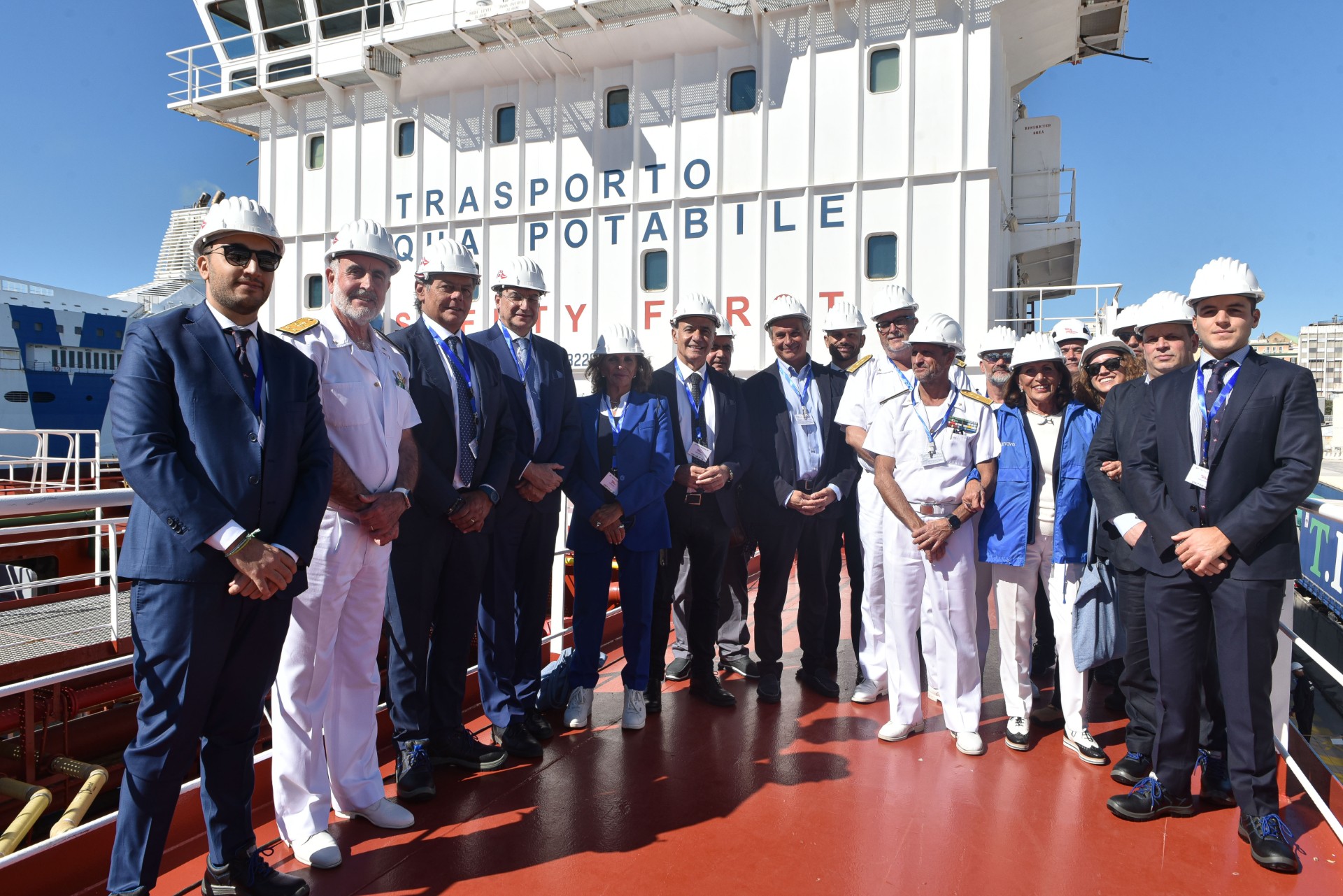
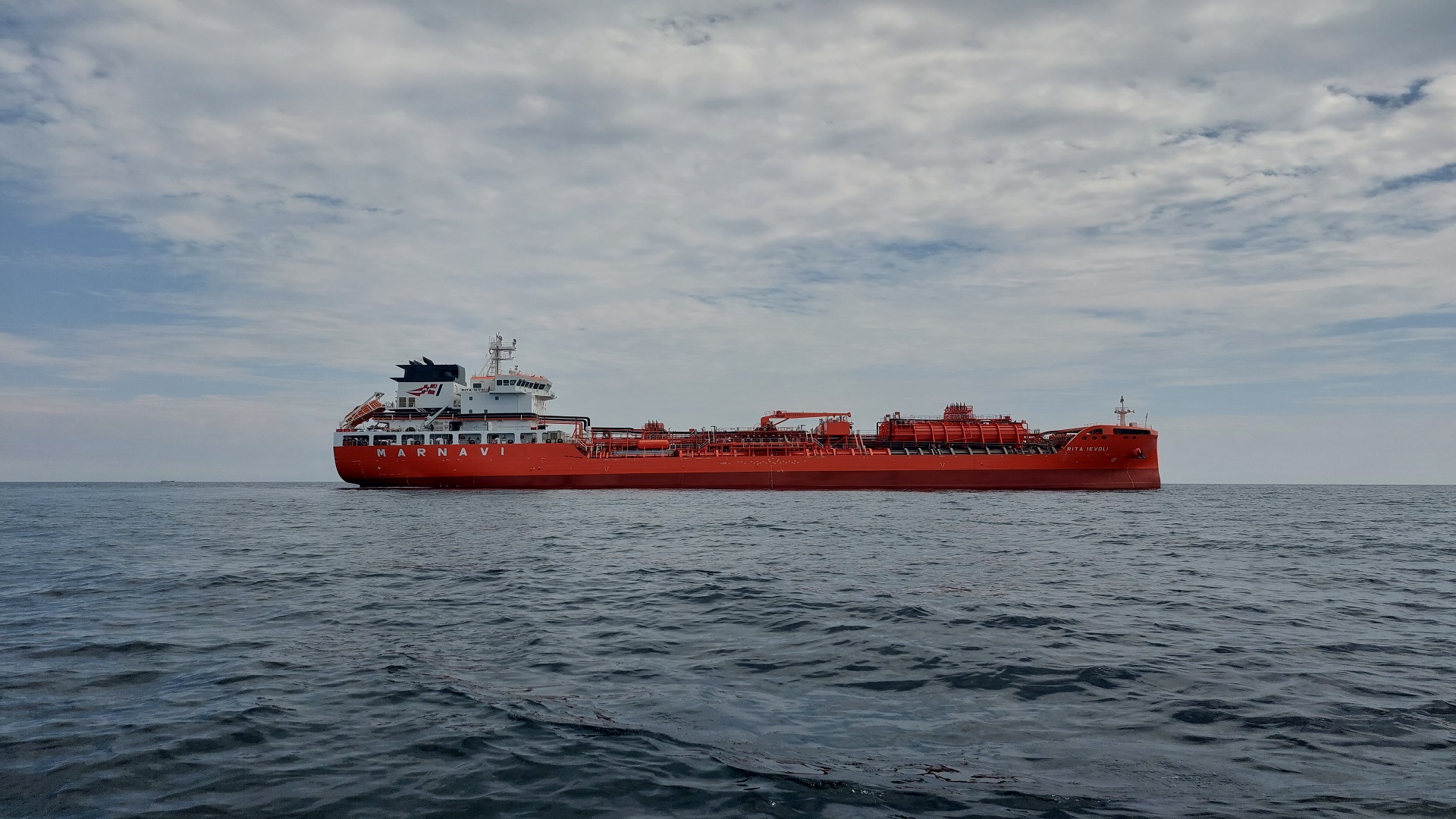
The project was implemented aboard an existing tanker vessel, already used for drinking water transport. An advanced technology desalination plant was installed on the vessel’s deck. The vessel adaptation activity, carried out in collaboration and under the supervision of the technical offices of the Italian Naval Register, led to the definition of a new class of vessels operating drinking water production and transport services.
Particular attention was paid to the optimal characteristics of the water that the system produces, both regarding the health of the final consumer and the proper balance that the water must have for preservation and distribution through existing distribution networks.
EXPECTED RESULTS:
Greater energy efficiency: expected improvement of 30%. Logistical improvement: high flexibility of the vessel-desalination plant system. Adaptive response to the different structural requirements of the land distribution network and to calamitous events.
Landscape and environmental aspects: no landscape impact and no damage to the ecosystem related to discharges.
Implementation times: the vessel is authorized for drinking water transport according to Legislative Decree 474/88. Elimination of downtime related to authorizations. Better response to localized emergencies.
Costs: in addition to technological improvements aimed at cost containment, no return costs related to environmental impact.
Safety: safe solution and protected from any damage related to malicious acts or natural events and/or due to pollution.
The results achieved are in line with those expected.